

How to Reduce Food Waste at Home: 5 Freezer Habits from a Holistic Nutritionist

Why your freezer should be your BFF for reducing food waste

Freezer for preventing food waste illustration

Your freezer is not a sad graveyard for mystery containers. It's a freshness tool.

When you use it intentionally, your freezer becomes your easiest, cheapest way to:

  • Keep food tasting like it did on day one
  • Rescue leftovers before they become compost
  • Turn scraps into future meals
  • Meal prep so you always have easy, healthy options at your fingertips

Here are my favorite freezer habits (from a busy holistic nutritionist).

1. Freeze it while it's still fresh, not five days later

The freezer is best at pausing time. It can't rewind it.

If you know you're not going to eat something in the next day or two, freeze it right away:

  • Leftover curry on night one, not night five
  • A loaf of bread right after your grocery run (pre-sliced is best)
  • Extra roasted sweet potatoes after your dinner party

Rule of thumb: freeze at peak flavor. You'll taste the difference later.

2. Cool fast, portion smart

Why freezing a whole pot of chicken soup is a bad idea:

  • It stays in the "danger zone"* longer while cooling
  • It freezes unevenly
  • It takes forever to thaw

*The "danger zone" is the temperature range between 40°F and 140°F where bacteria multiply so fast they can make your food unsafe to eat in just a couple of hours.

Instead:

  • Cool food quickly by spreading it in a shallow container or using an ice bath
  • Portion into 2–3 serving amounts
  • Freeze flat in zip or vacuum seal bags so they stack like files
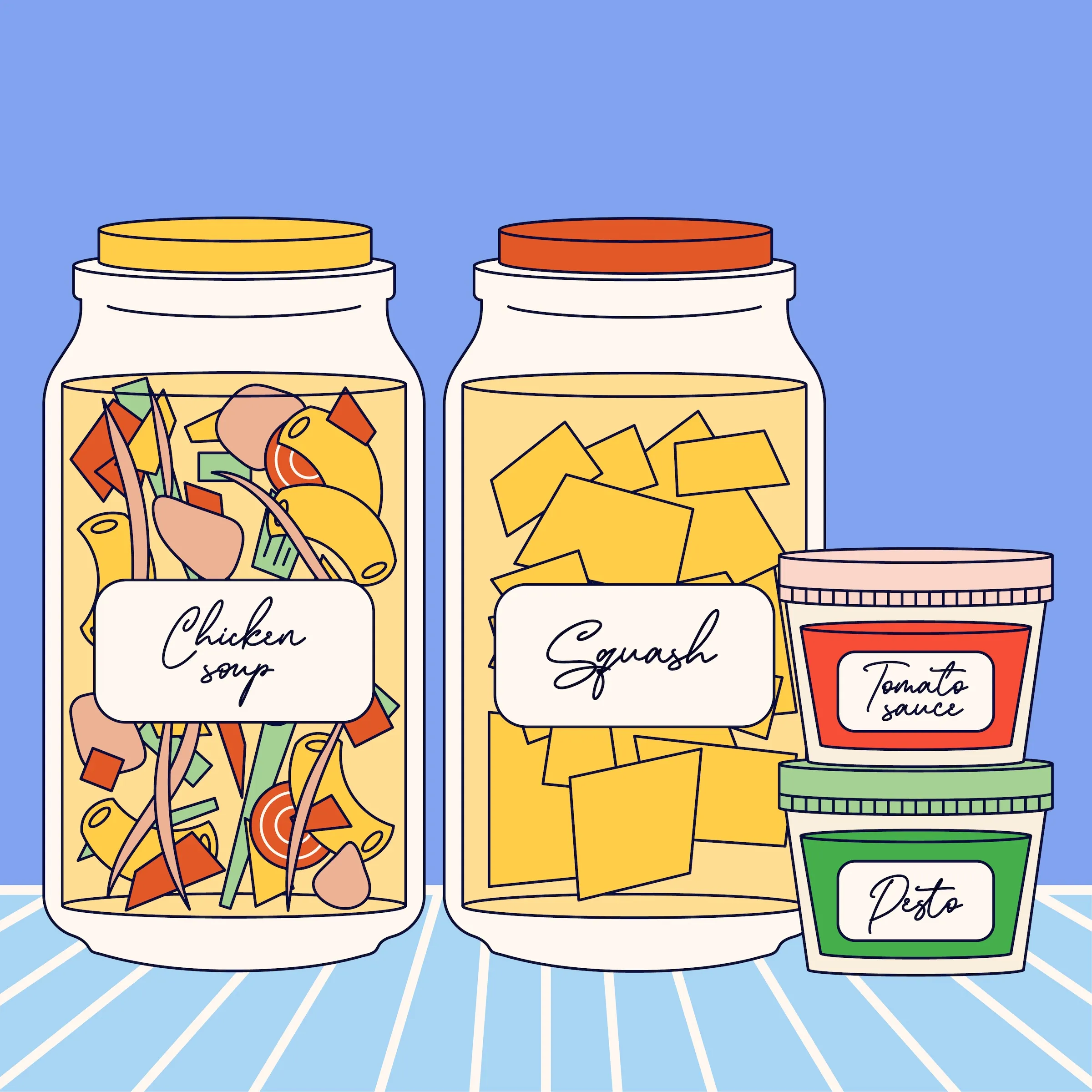
jars of food in freezer for preventing food waste
3. Label everything, because your future self will thank you

The number one reason freezer food gets wasted isn't quality. It's mystery.

Label with:

  • What it is
  • The date
  • Reheat instructions & serving size (optional but helpful)

Examples:

  • "Tomato sauce — 3/5/26"
  • "Chicken stock — 2 cups — 3/5/26"
  • "Banana bread slices — 3/5/26"

Bonus tip: painter's tape and a Sharpie actually stick. Masking tape does not.

4. Start a scrap bag for veggie scraps (and one for bones)

This is one of the most satisfying kitchen systems because it turns would-be trash into real flavor.

Keep two labeled bags or containers in your freezer:

  • Veg Stock Bag: onion skins, carrot ends, celery leaves, herb stems, mushroom stems
  • Bone and Meat Stock Bag: chicken carcasses, bones, shrimp shells, parmesan rinds

When the bag is full, you're one simmer away from liquid gold to use as the base of soups, stews and sauces.

A few notes from the culinary side:

  • Skip cruciferous scraps (broccoli, cauliflower, cabbage) if you don't love bitter stock
  • Garlic is great, but a little goes a long way
  • Freeze scraps clean and reasonably dry so they don't clump into an ice brick
bag of vegetable scraps in freezer for preventing food waste
5. Think components, not just leftovers

Freezing whole meals is great. Freezing building blocks is a game changer.

Ideas:

  • Cooked grains (rice, quinoa)
  • Caramelized onions
  • Pesto
  • Tomato paste in tablespoon-sized blobs
  • Shredded cooked chicken
  • Cooked beans (yes, they freeze beautifully)

This makes weeknight cooking faster and kills the urge to order takeout just because "there's nothing in the fridge."

A final freezer BFF reminder: A BFF shows up for you on a hard day, remembers what you like, and pulls exactly the right thing out of nowhere when you need it most. That is a well stocked freezer at 7pm on a Tuesday when you are exhausted and two minutes from ordering takeout.

Start with three habits:

  1. Freeze food early, while it still tastes great
  2. Label it clearly
  3. Keep a scrap bag for future stock

Your freezer has been waiting to be your BFF. Now you know how to let it.

Freezing FAQ:

Frequently Asked Questions About Freezing Food and Reducing Waste

Does freezing food actually reduce food waste? Yes, and the impact adds up fast. The average American household throws away nearly a third of the food they buy because fresh food expires before it gets eaten. Freezing interrupts that cycle entirely. No waste, no guilt, no throwing money in the trash.

How long can you freeze cooked food safely? Most frozen food stays safe indefinitely as long as it stays frozen, but quality is a different story. For best flavor, aim to use cooked soups and stews within 2 to 3 months, cooked meat within 2 to 3 months, and bread or baked goods within 1 to 2 months. This is exactly why labeling is non-negotiable.

What foods should you not freeze? You can freeze almost any food, with a few exceptions. Canned food and eggs in their shells should not go in the freezer. Mayonnaise, cream sauce, and lettuce simply do not freeze well either. High water content foods like cucumber, watermelon, and cooked pasta turn mushy. The rule of thumb: if texture is everything in that dish, think twice before freezing it.

How do I know if frozen food has gone bad? Look for freezer burn, which shows up as grayish white dry patches on the surface. It is not a safety issue but it does affect flavor and texture. If something smells off after thawing, trust your nose and toss it. The best prevention is airtight packaging and eating within the quality windows above.

What is the safest way to thaw frozen food? There are three safe ways to defrost food: in the refrigerator, in cold water in a sealed bag, or in the microwave. If you use the microwave, plan to cook the food immediately after since some areas may start to warm up. Never thaw food on the counter or in hot water. That brings it right back into the danger zone and completely defeats the point of freezing it safely in the first place.

What are the best containers for freezing food? Freezer safe zip bags laid flat are your best everyday option since they stack like files and thaw fast. For soups and liquids, wide mouth mason jars work great but always leave an inch of headspace since liquid expands when frozen. Vacuum seal bags are the gold standard for long term storage (my favorite!). Skip thin sandwich bags or any container not labeled freezer safe.

Can you refreeze food after it has been thawed? If food still contains ice crystals or is at 40°F or below, it is safe to refreeze and it is not necessary to cook raw foods before refreezing. That said, refreezing can affect texture, so use your judgment on quality. If food was thawed on the counter or got warmer than 40°F for more than 2 hours, toss it rather than refreeze it.